Private jet charter airports Boston
Private jet charter airports Boston flyers should weigh five fields. Hanscom runs a 7,011-foot runway at 133 feet elevation. The right field depends on your jet, your route, and the month.
- Home
- Airports
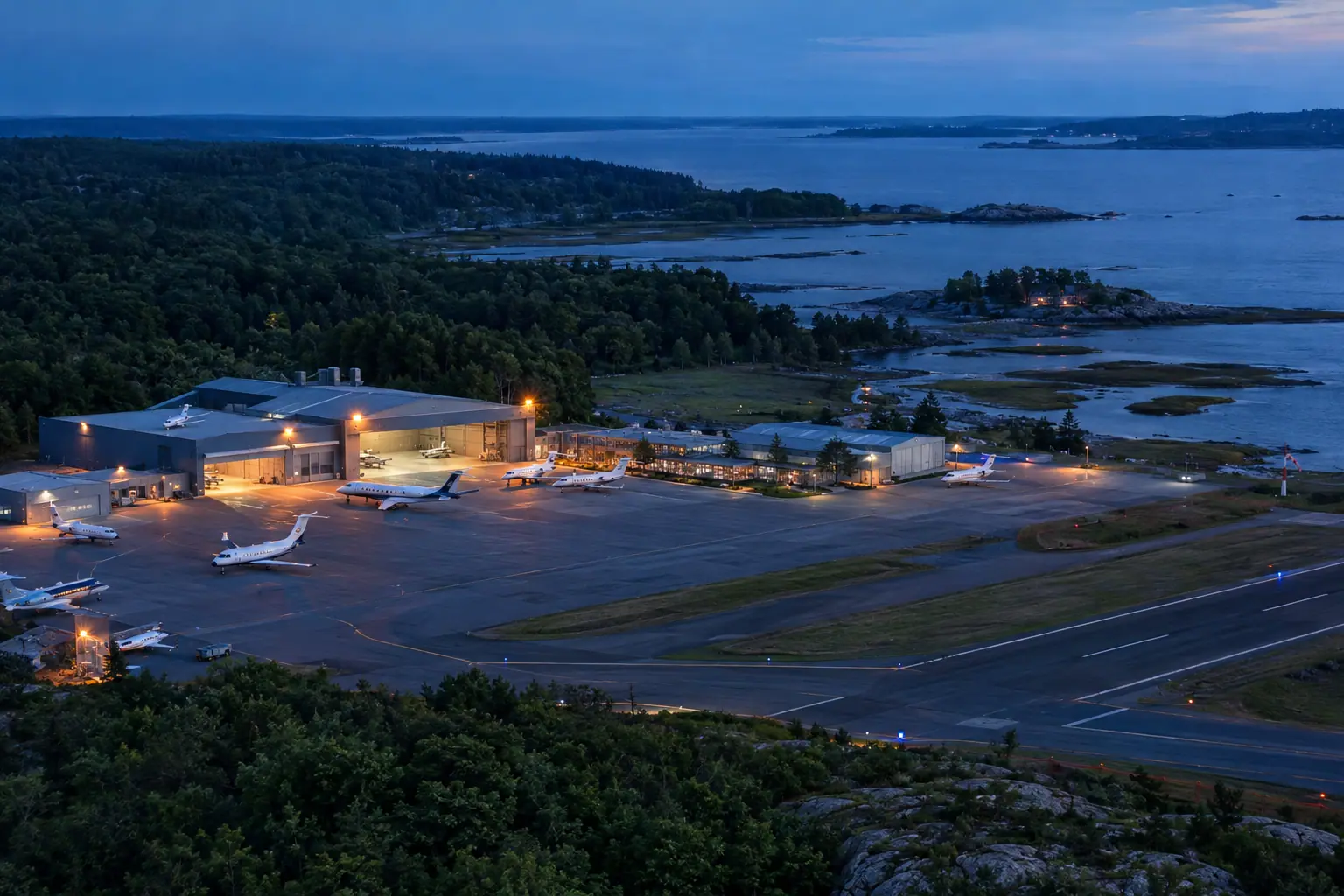
Private jet charter airports Boston travelers actually use come down to a handful of fields, and the differences matter more than the names suggest. Boston Logan International (BOS) has the longest runway at 10,083 feet and the lowest elevation, 20 feet, but it is also the busiest and the most airline-heavy. Laurence G Hanscom Field (BED) west of the city is the classic business-aviation choice, with a 7,011-foot runway and four FBOs on the field. Beverly Regional (BVY) north of the city and Lawrence Municipal (LWM) further north both run 5,001-foot runways. Norwood Memorial (OWD) sits south.
We are a charter broker, not an operator. Every flight we arrange is flown by an FAA Part 135 operator that holds operational control, and we act as your agent under DOT Part 295. That means we quote across operators and aircraft, and the price you see is an estimate until an operator confirms the tail and the crew. The fields above are where those aircraft actually land, and a broker who quotes across several operators can show you the aircraft and the field together before you commit to either.
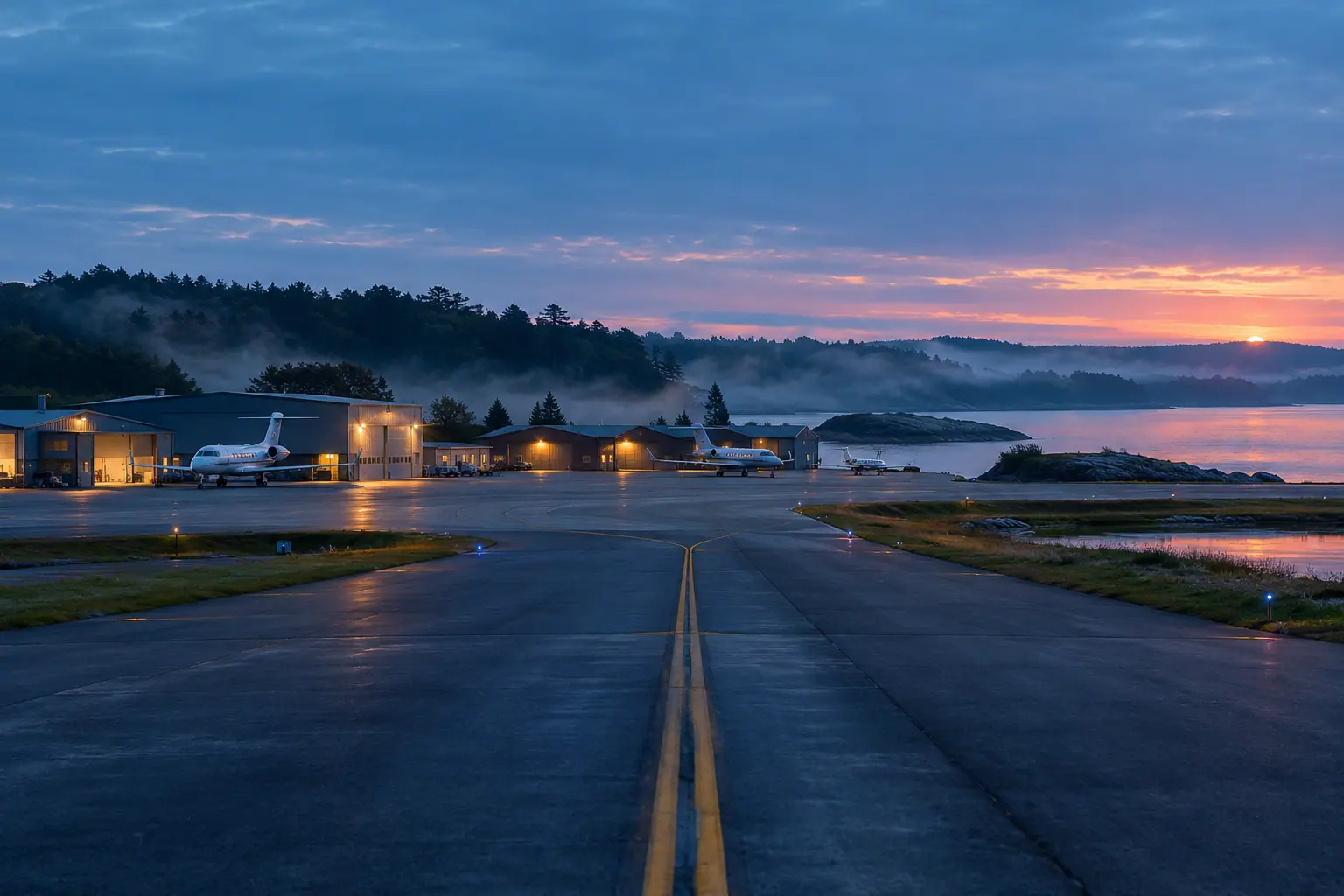
Laurence G Hanscom Field
- KBED code
- 133 ft elevation
2 runways, longest 7,011 ft. 14 miles to Downtown Boston. FBO: Jet Aviation Bedford, Atlantic Aviation, Signature Aviation, FlightLevel Aviation.
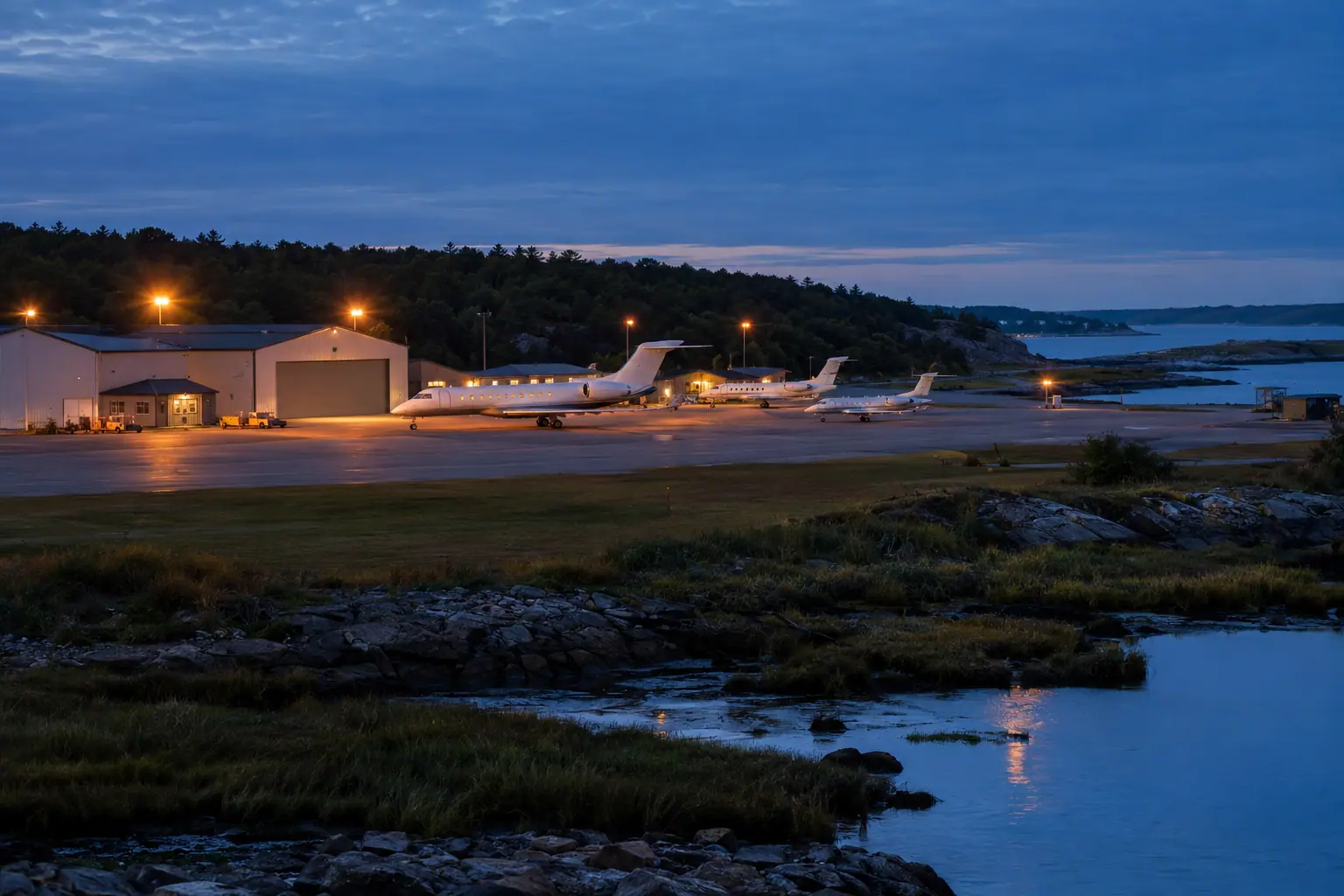
Beverly Regional Airport
- KBVY code
- 107 ft elevation
2 runways, longest 5,001 ft. 17 miles to Downtown Boston. FBO: FlightLevel Aviation.
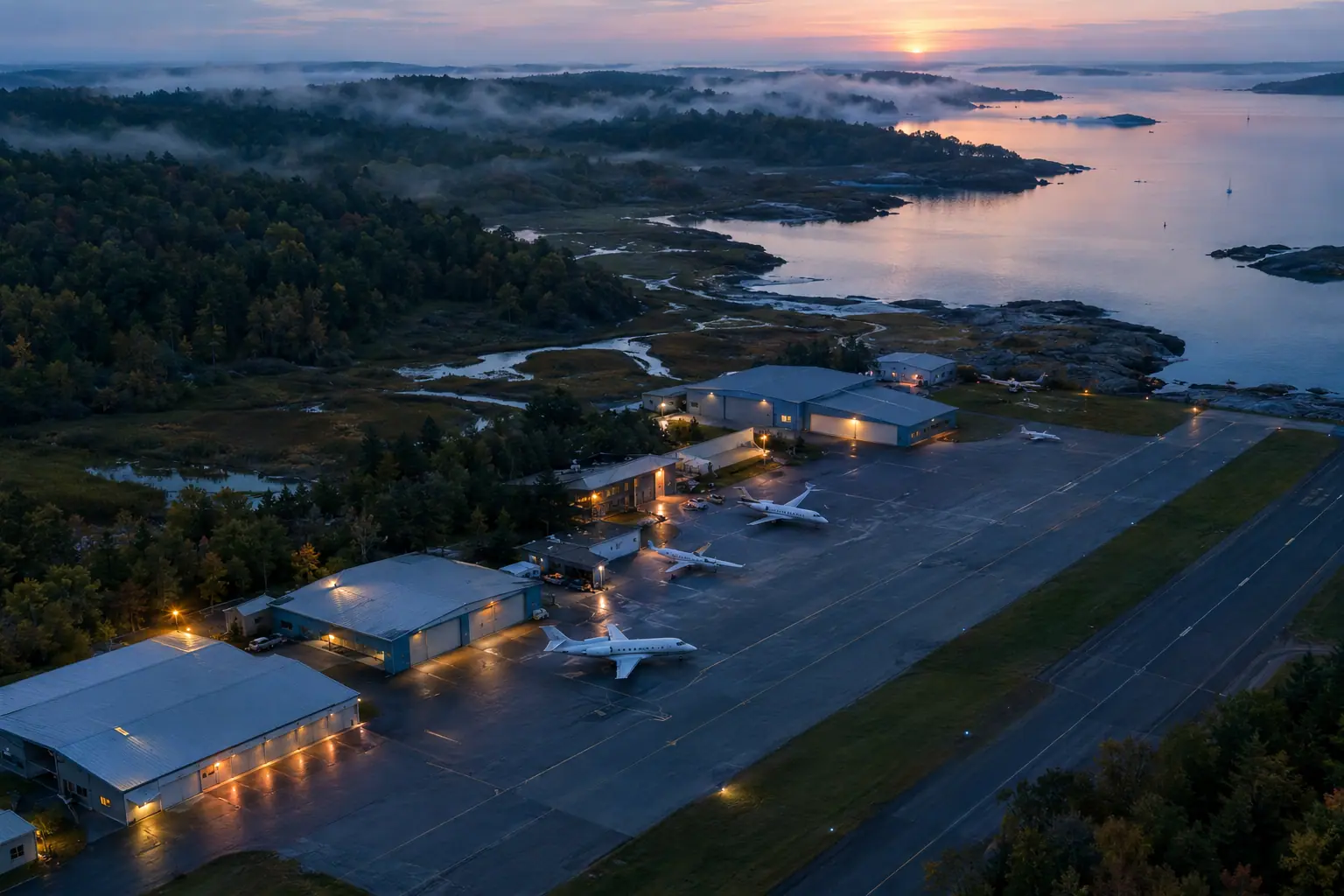
Lawrence Municipal Airport
- KLWM code
- 148 ft elevation
2 runways, longest 5,001 ft. 25 miles to Downtown Boston.
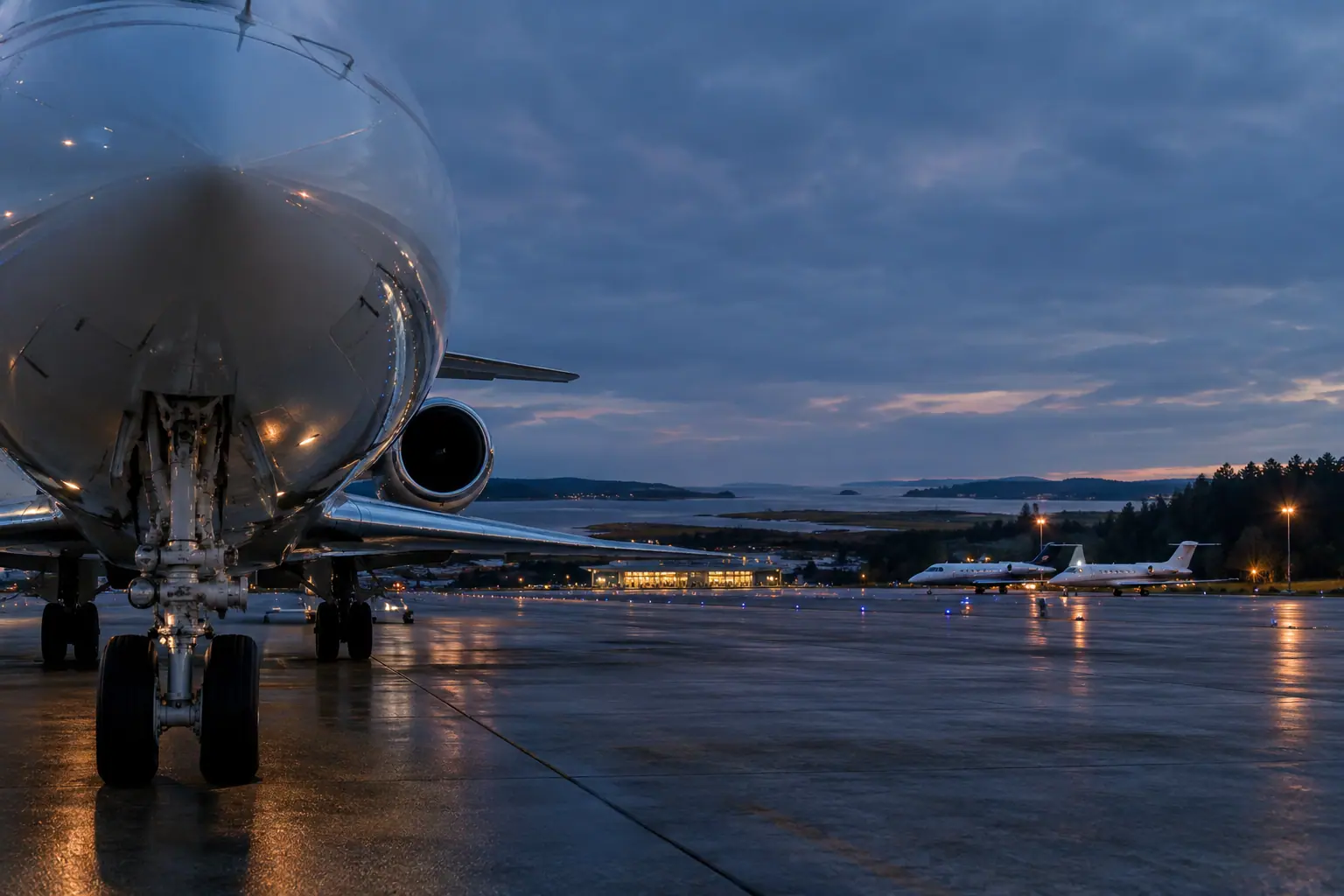
Boston Logan International Airport
- KBOS code
- 20 ft elevation
5 runways, longest 10,083 ft. 3 miles to Downtown Boston. FBO: Jet Aviation Bedford, FlightLevel Aviation.
How Boston's five charter fields compare
Logan gives you the longest runway and the shortest ride downtown, which is why it wins when the schedule is tight. Logan's 10,083-foot runway at 20 feet elevation handles heavy jets on long-haul legs without a weight penalty. But Logan is an airline hub, and general aviation slots and handling costs reflect that. If your trip is a short hop or you value a quiet ramp, Logan is usually the wrong tool. When your flight is a short leg into Boston, then Hanscom or Beverly usually saves both drive time and handling cost compared with the airline terminal. Hanscom is the field most Boston private jet charters default to, and for good reason. Hanscom's 7,011-foot runway and four FBOs keep midsize and super-midsize jets moving, and July density altitude there peaks around 1,800 feet, so performance is rarely the constraint. Beverly and Lawrence both offer 5,001 feet, which suits light jets and turboprops. When your aircraft is a light jet or turboprop, Beverly and Lawrence cut drive time north of the city, and both sit within a few miles of each other in runway length. Norwood serves the south shore. If you are comparing a jet against a turboprop for a New England run, then the 5,001-foot fields and the turboprop's 1,500-nm range often line up neatly. A broker who knows the local runways can match the aircraft class to the field in one pass, rather than quoting a heavy jet into a strip it should not use.
| Airport | Elevation | Longest runway | To Downtown Boston | Jul density alt. |
|---|---|---|---|---|
| Laurence G Hanscom Field | 133 ft | 7,011 ft | 14 mi | 1,800 ft |
| Beverly Regional Airport | 107 ft | 5,001 ft | 17 mi | 1,700 ft |
| Lawrence Municipal Airport | 148 ft | 5,001 ft | 25 mi | 1,800 ft |
| Boston Logan International Airport | 20 ft | 10,083 ft | 3 mi | 1,600 ft |
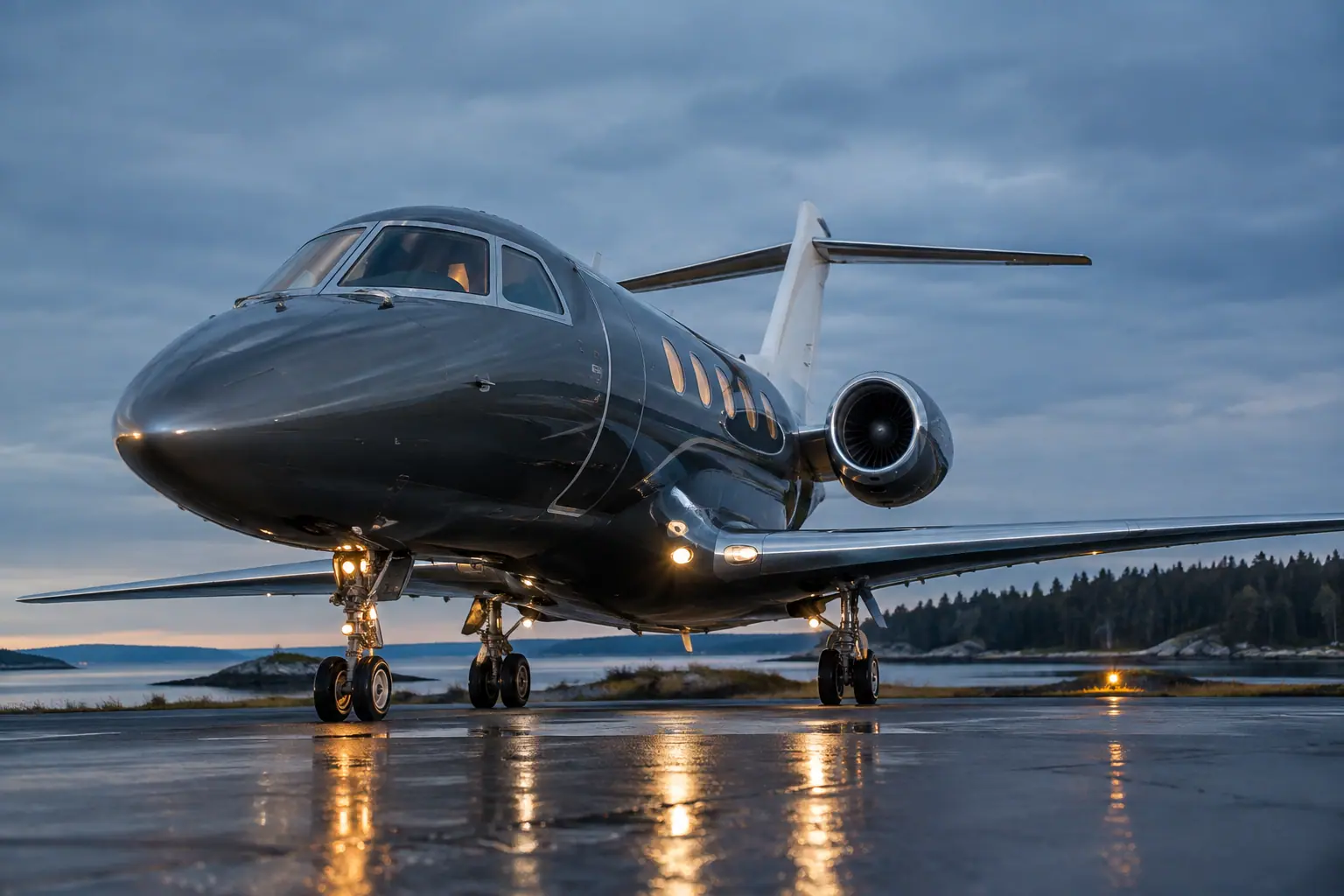
Summer heat and runway performance
Heat is the quiet variable in Boston charter planning, and it shows up as density altitude. In July, Hanscom's density altitude reaches about 1,800 feet, which trims payload on light jets; at 115°F the peak climbs to 2,300 feet. That is not a crisis, but it can mean a fuel stop or a passenger limit on a hot afternoon departure. Pilots run these numbers before every flight, and a good operator will tell you if the heat changes the plan. When a light jet departs Hanscom on a hot July afternoon, then the operator should show you the performance numbers before you accept the quote.
If you are flying a turboprop or light jet out of Beverly or Lawrence on a July afternoon, then expect the 5,001-foot runway and the 1,700-to-1,800-foot density altitude to be checked together. When the mercury hits 115°F, Beverly's density altitude also reaches 2,300 feet, so plan the cool morning departure. Winter flips the equation: January density altitude runs negative, and cold air helps performance. The trade is weather and deicing, not runway length. Cold January air gives the 5,001-foot fields more margin than a July afternoon does, so a winter departure from Beverly is often the easier one to plan.
FAQs
Which airport do most private jet charter airports Boston flights use?
Hanscom Field (BED) is the default for most Boston private jet charters, with a 7,011-foot runway and four FBOs. Logan (BOS) is used when the longest runway, 10,083 feet, or the shortest drive downtown matters most. Beverly (BVY) and Lawrence (LWM) at 5,001 feet serve light jets and turboprops north of the city. Norwood covers the south.
How much does a private jet charter from Boston cost?
Estimates run from about $4,000 to $6,000 for a light jet to New York, 158 nautical miles and 0h 41m in the air. A light jet to Los Angeles, 2,247 nm and 6h 32m, estimates $25,000 to $38,000. Turboprops start lower, at $2,200 to $3,500 per hour. These are estimates until an operator confirms the aircraft.
Can I fly private into Logan International?
Yes. Logan (BOS) has a 10,083-foot runway and sits at 20 feet elevation, and it handles private jets alongside airline traffic. Expect slot coordination and higher handling costs than Hanscom. For international arrivals, CBP clearance is available at Logan. If your schedule is flexible, Hanscom is usually the smoother field.
What is density altitude and why does it matter in Boston?
Density altitude is the altitude the aircraft feels given heat and humidity. At Hanscom in July it reaches about 1,800 feet, and at 115°F it peaks near 2,300 feet. On a 5,001-foot runway like Beverly's, that combination can limit fuel or passengers on a hot afternoon. Pilots calculate it before every departure.
Do I need customs for a private jet charter from Boston to the Caribbean?
Yes. International legs such as Boston to Nassau, 1,090 nm and 2h 58m, or Boston to Turks and Caicos, 1,244 nm and 4h 05m, require CBP clearance on return. Your operator files the manifest and arranges the port of entry. Logan is a common port of entry; some smaller fields are not. Confirm the clearance plan before you book.
Who is responsible for the flight when I book through a broker?
The FAA Part 135 operator holds operational control of the flight, including crew, maintenance, and dispatch. We act as your agent under DOT Part 295 and arrange the trip across operators. That structure is standard for charter brokers. Ask for the operator's name and certificate before you commit, and read the charter agreement.